

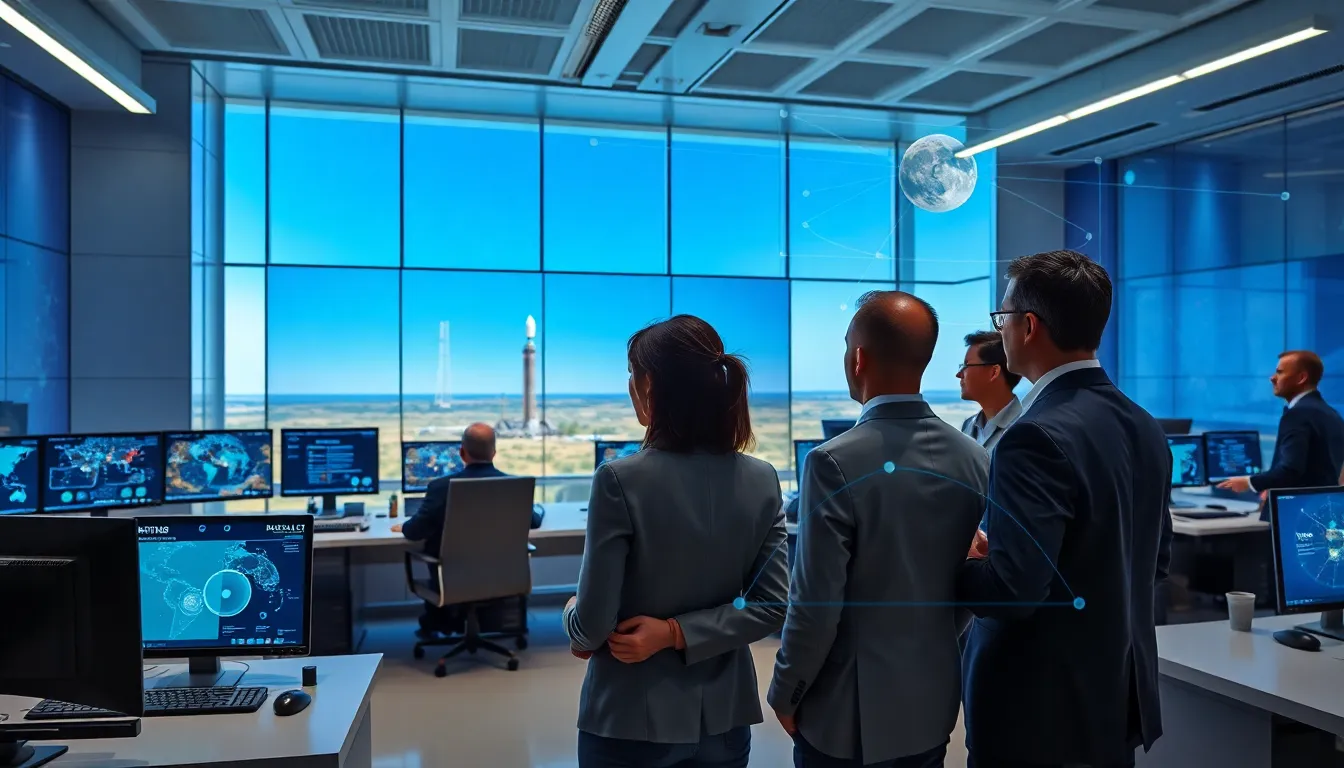
Space technology has transformed how humans understand the universe. From satellites orbiting Earth to rovers exploring Mars, these tools push the limits of scientific discovery. The past decade brought major shifts in space technology, including reusable rockets, advanced satellite systems, and artificial intelligence applications. Private companies now compete alongside government agencies to expand access to space. This article examines the key innovations driving modern space exploration and what the future holds for humanity beyond Earth.
Table of Contents
ToggleKey Takeaways
- Space technology has evolved rapidly with reusable rockets, advanced satellites, and AI-driven systems reshaping how humans explore the universe.
- Reusable rockets like SpaceX’s Falcon 9 have cut launch costs by more than half, making space missions more accessible and sustainable.
- Small satellites and mega-constellations now deliver global internet coverage, Earth monitoring, and GPS services at a fraction of traditional costs.
- Artificial intelligence enables spacecraft to operate autonomously, process massive datasets, and track dangerous space debris in real time.
- Lunar bases, asteroid mining, and space-based solar power represent the next frontier of space technology innovation over the coming decades.
Key Advancements in Satellite Systems
Satellite systems form the backbone of modern space technology. These orbiting devices support communication networks, weather forecasting, GPS navigation, and Earth observation. Recent years have seen dramatic changes in how companies build and deploy satellites.
Small satellites, often called CubeSats, now perform tasks that once required massive spacecraft. A standard CubeSat measures just 10 centimeters on each side and costs a fraction of traditional satellites. Universities and startups can now afford to launch their own space technology projects.
Mega-constellations represent another major shift. SpaceX’s Starlink network includes over 5,000 satellites providing internet coverage across the globe. Amazon’s Project Kuiper and OneWeb are building similar systems. These constellations rely on space technology innovations in manufacturing to produce satellites at unprecedented rates.
Earth observation satellites have grown more sophisticated too. They track climate change, monitor crop health, detect wildfires, and even count individual trees from orbit. High-resolution imaging combined with machine learning allows these systems to process data faster than ever.
The miniaturization of electronics drives much of this progress. Components that filled entire rooms in the 1960s now fit on a single chip. This trend lets engineers pack more capability into smaller packages, reducing launch costs and expanding what space technology can achieve.
Reusable Rockets and Launch Vehicles
Reusable rockets changed the economics of reaching orbit. Before SpaceX landed its first Falcon 9 booster in 2015, every rocket was single-use. Imagine throwing away an airplane after one flight, that was standard practice for decades.
SpaceX now routinely lands and reflies its boosters. Some Falcon 9 rockets have flown more than 20 missions. This space technology breakthrough cut launch costs dramatically. A Falcon 9 launch costs around $67 million, compared to $150 million or more for comparable rockets a decade ago.
The Starship program aims to push reusability further. This fully reusable system could eventually carry 100 tons to orbit at costs approaching $10 per kilogram. If successful, it would revolutionize what space technology makes possible.
Other companies have followed SpaceX’s lead. Rocket Lab recovers its Electron boosters by parachute, then catches them with helicopters. Blue Origin’s New Glenn rocket features a reusable first stage. China’s space program has tested landing legs on its Long March rockets.
Reusability affects more than just cost. It enables rapid turnaround between missions. SpaceX has launched the same booster twice within three weeks. This cadence supports ambitious projects like satellite mega-constellations and frequent resupply missions to the International Space Station.
The environmental benefits matter too. Reusing hardware means less manufacturing waste and fewer resources consumed per launch. As space technology activity increases, sustainability becomes more important.
Space Exploration Missions and Discoveries
Recent space exploration missions have delivered remarkable discoveries. NASA’s Perseverance rover landed on Mars in February 2021 and has since collected rock samples for eventual return to Earth. The rover’s Ingenuity helicopter proved powered flight works on another planet, a first for space technology.
The James Webb Space Telescope began operations in 2022 and immediately transformed astronomy. Its infrared sensors peer through cosmic dust to reveal forming stars and distant galaxies. Webb has detected water vapor on exoplanets and captured images of objects over 13 billion light-years away.
Lunar exploration has accelerated. NASA’s Artemis program aims to return astronauts to the Moon by 2025. China’s Chang’e missions have returned lunar samples and placed a rover on the Moon’s far side. India’s Chandrayaan-3 successfully landed near the lunar south pole in 2023.
Asteroid missions provide insights into solar system formation. NASA’s OSIRIS-REx returned samples from asteroid Bennu in September 2023. Japan’s Hayabusa2 delivered material from asteroid Ryugu in 2020. These samples help scientists understand the building blocks of planets.
Private companies contribute to exploration too. SpaceX’s Crew Dragon regularly ferries astronauts to the International Space Station. The company plans missions to Mars within this decade. Space technology advances make such ambitious goals more realistic each year.
The Role of Artificial Intelligence in Space
Artificial intelligence has become essential to modern space technology. Spacecraft operate millions of miles from Earth, where communication delays make real-time control impossible. AI allows these systems to make decisions independently.
Mars rovers use AI to identify hazards and plan their routes. Perseverance can drive itself across the Martian surface, avoiding rocks and dangerous terrain without waiting for instructions from Earth. This autonomy lets the rover cover more ground and conduct more science.
Satellite operations increasingly rely on AI. Ground stations process enormous amounts of data from Earth observation satellites. Machine learning algorithms identify patterns in this data, detecting deforestation, tracking ships, or predicting weather events.
Space debris tracking presents another AI application. Over 30,000 pieces of debris larger than 10 centimeters orbit Earth. AI systems predict collision risks and help satellite operators plan avoidance maneuvers. As space technology activity increases, managing this orbital traffic becomes critical.
AI also improves spacecraft design. Engineers use machine learning to optimize structures, reducing weight while maintaining strength. Generative design algorithms can propose solutions that human designers might never consider.
Deep space missions depend on AI even more heavily. The Voyager probes, now over 15 billion miles from Earth, take nearly a day to send signals home. Future interstellar probes will need sophisticated AI to handle situations without any human guidance.
Emerging Trends and Future Outlook
Several trends will shape space technology over the coming decades. In-space manufacturing could transform how humanity builds large structures. Instead of launching finished products, companies might send raw materials and assemble them in orbit. Zero gravity enables manufacturing processes impossible on Earth.
Space-based solar power has attracted renewed interest. Satellites could collect solar energy continuously and beam it to Earth as microwaves. China, Japan, and the European Space Agency have active research programs in this area.
Space tourism is becoming real. Blue Origin and Virgin Galactic offer suborbital flights to paying customers. SpaceX plans to fly private citizens around the Moon. As costs drop, space technology could open access to ordinary people.
Lunar bases appear on multiple space agencies’ roadmaps. NASA’s Artemis program includes plans for a sustained human presence on the Moon. China has outlined similar goals. These bases would serve as stepping stones to Mars and test technologies for longer missions.
Mining asteroids and the Moon for resources remains a long-term goal. Water ice at the lunar poles could provide drinking water, oxygen, and rocket fuel. Asteroids contain valuable metals. Space technology will eventually make extracting these resources economically viable.
International cooperation continues alongside competition. The International Space Station has hosted astronauts from 20 countries. Future projects like the Lunar Gateway will involve multiple nations working together.

