

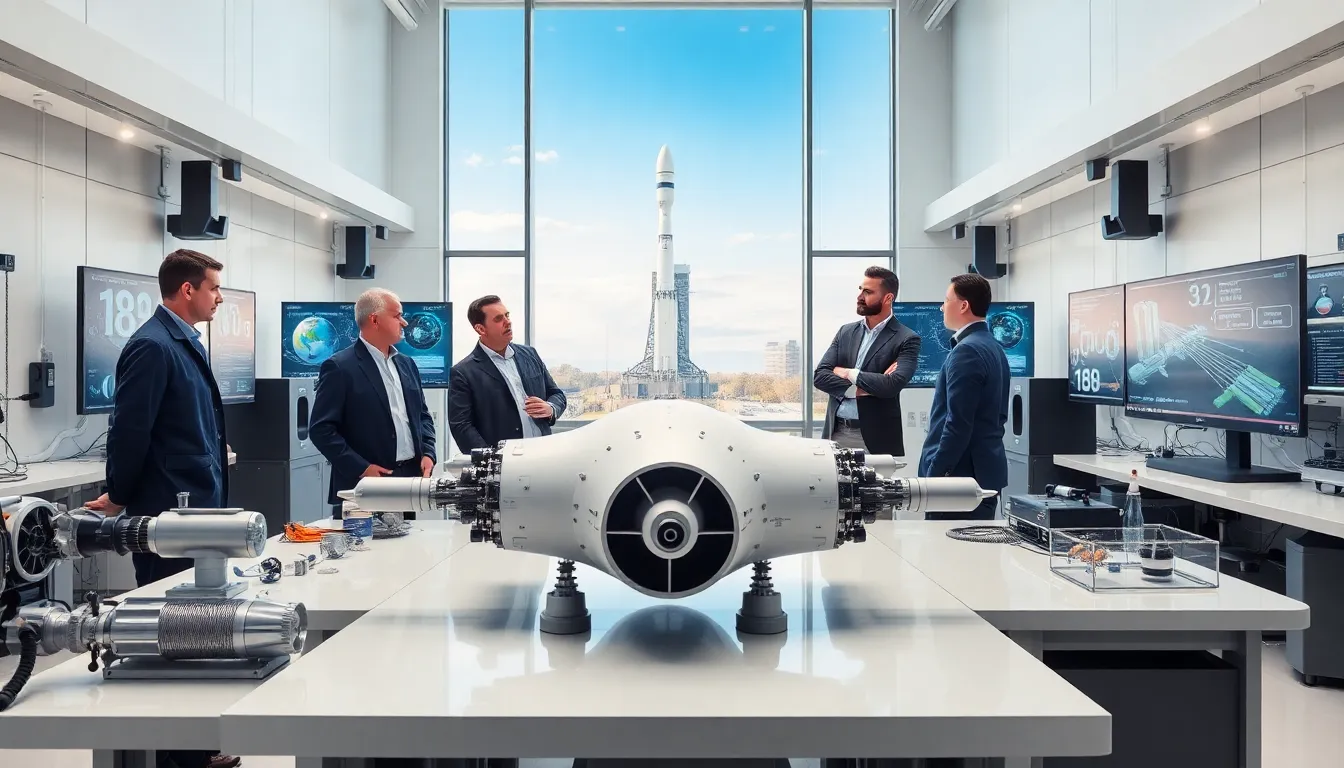
Space technology techniques shape how humans explore the universe. These methods include propulsion systems, satellite networks, remote sensing tools, and spacecraft manufacturing processes. Each technique solves specific challenges in space exploration.
The space industry has grown rapidly over the past decade. Private companies now launch rockets alongside government agencies. New materials and computing power have transformed spacecraft design. This article examines the key space technology techniques that make modern exploration possible.
Table of Contents
ToggleKey Takeaways
- Space technology techniques encompass propulsion systems, satellite networks, remote sensing, and spacecraft manufacturing—each solving unique challenges in space exploration.
- Reusable launch systems like SpaceX’s Falcon 9 have dramatically reduced launch costs and increased mission frequency.
- LEO satellite constellations (Starlink, OneWeb, Kuiper) use advanced space technology techniques to deliver low-latency internet to remote areas worldwide.
- Remote sensing methods including optical imaging, radar, and spectral analysis provide critical data for weather forecasting, agriculture, and climate research.
- Additive manufacturing (3D printing) is revolutionizing spacecraft production by reducing part counts and shortening build times.
- Emerging innovations like in-space manufacturing, nuclear propulsion, and orbital debris removal will shape the future of space exploration.
Core Propulsion and Launch Techniques
Propulsion systems move spacecraft from Earth’s surface into orbit and beyond. These space technology techniques determine mission success and payload capacity.
Chemical Propulsion
Chemical rockets remain the primary launch method. They burn fuel and oxidizer to create thrust. Liquid-fuel engines offer precise control and can restart multiple times. Solid-fuel boosters provide high initial thrust but cannot be shut down once ignited.
SpaceX’s Falcon 9 uses liquid oxygen and RP-1 kerosene. NASA’s Space Launch System combines liquid hydrogen engines with solid rocket boosters. Each design balances power, cost, and reliability.
Electric Propulsion
Ion engines use electricity to accelerate charged particles. They produce less thrust than chemical rockets but operate for months or years. This makes them ideal for deep space missions and satellite station-keeping.
NASA’s Dawn spacecraft used ion propulsion to visit Vesta and Ceres. Many modern communication satellites rely on electric thrusters to maintain their orbital positions.
Reusable Launch Systems
Reusable rockets have reduced launch costs significantly. SpaceX lands Falcon 9 first stages on drone ships and launch pads. Blue Origin’s New Shepard returns to vertical landing sites. These space technology techniques cut manufacturing expenses and increase launch frequency.
Satellite Communication and Navigation Systems
Satellites form the backbone of global communications and positioning services. Space technology techniques in this field affect billions of people daily.
Geostationary Satellites
Geostationary satellites orbit at 35,786 kilometers above Earth’s equator. They match Earth’s rotation, appearing stationary from the ground. This positioning makes them perfect for television broadcasting, weather monitoring, and telecommunications.
Three geostationary satellites can cover most of Earth’s populated areas. But, high latitudes receive weaker signals due to low elevation angles.
Low Earth Orbit Constellations
LEO constellations place hundreds or thousands of satellites in orbits below 2,000 kilometers. Starlink, OneWeb, and Amazon’s Project Kuiper use this approach. These networks provide low-latency internet access to remote areas.
LEO satellites move quickly across the sky. Ground antennas must track multiple satellites and hand off connections smoothly. This requires advanced space technology techniques in signal processing and network management.
Global Navigation Satellite Systems
GPS, GLONASS, Galileo, and BeiDou provide positioning services worldwide. These systems use precise atomic clocks and signal timing to calculate locations within centimeters. Autonomous vehicles, aircraft, and smartphones depend on these space technology techniques.
Remote Sensing and Earth Observation Methods
Remote sensing satellites gather data about Earth’s surface, atmosphere, and oceans. These space technology techniques support weather forecasting, agriculture, disaster response, and climate research.
Optical Imaging
Optical sensors capture visible and near-infrared light reflected from Earth. High-resolution satellites can image objects smaller than one meter. Companies like Maxar and Planet operate large imaging constellations.
Optical imaging works best in clear conditions. Clouds block visible light and limit observation windows in many regions.
Radar and Synthetic Aperture Radar
Radar satellites transmit microwave signals and measure reflections. They operate day and night, regardless of cloud cover. Synthetic aperture radar (SAR) creates high-resolution images by processing data as the satellite moves along its orbit.
SAR detects ground subsidence, oil spills, and ship movements. The European Space Agency’s Sentinel-1 satellites provide free SAR data for environmental monitoring.
Spectral Analysis
Multispectral and hyperspectral sensors measure light across many wavelength bands. Different materials reflect light in characteristic patterns. Analysts use these space technology techniques to identify crop health, mineral deposits, and water quality.
Landsat satellites have collected multispectral data since 1972. This archive helps scientists track environmental changes over decades.
Spacecraft Design and Manufacturing Approaches
Modern spacecraft design combines advanced materials, computer modeling, and rigorous testing. These space technology techniques ensure missions survive launch stresses and space conditions.
Lightweight Materials
Carbon fiber composites reduce spacecraft mass while maintaining strength. Aluminum-lithium alloys weigh less than traditional aluminum. Every kilogram saved on structure allows more payload or fuel.
James Webb Space Telescope uses beryllium mirrors coated with gold. Beryllium stays stable at extreme temperatures and weighs much less than glass.
Modular Design
Modular spacecraft use standardized components and interfaces. Satellite manufacturers can swap payloads, power systems, and propulsion modules. This approach speeds production and reduces costs.
SmallSat platforms follow standard form factors like CubeSats. Universities and startups can build missions using off-the-shelf components. These space technology techniques have democratized access to orbit.
Additive Manufacturing
3D printing creates complex parts that traditional machining cannot produce. Rocket engines now feature printed combustion chambers and injectors. This reduces part counts and shortens production schedules.
Relativity Space aims to 3D print entire rockets. Their Terran 1 rocket uses fewer than 1,000 parts compared to 100,000 in traditional designs.
Emerging Innovations in Space Technology
New space technology techniques promise to transform exploration capabilities. Research programs and private ventures are developing several breakthrough approaches.
In-Space Manufacturing
Manufacturing in microgravity offers unique advantages. Without gravity, materials mix differently and structures form without convection currents. Companies are developing facilities to produce fiber optics, pharmaceuticals, and metal alloys in orbit.
Varda Space Industries launched its first manufacturing capsule in 2023. These space technology techniques could create products impossible to make on Earth.
Nuclear Propulsion
Nuclear thermal rockets heat propellant using reactor heat rather than combustion. They offer higher efficiency than chemical rockets for deep space travel. NASA and DARPA are testing nuclear propulsion systems for Mars missions.
Nuclear electric propulsion combines reactors with ion engines. This approach could power crewed missions to the outer solar system.
Orbital Debris Removal
Space debris threatens active satellites and future missions. Several companies are developing debris removal spacecraft. These vehicles will capture defunct satellites and rocket stages using nets, harpoons, or robotic arms.
Astroscale demonstrated proximity operations with its ELSA-d mission. ClearSpace plans to remove a Vega rocket upper stage in 2026. These space technology techniques will help maintain safe orbital environments.

