

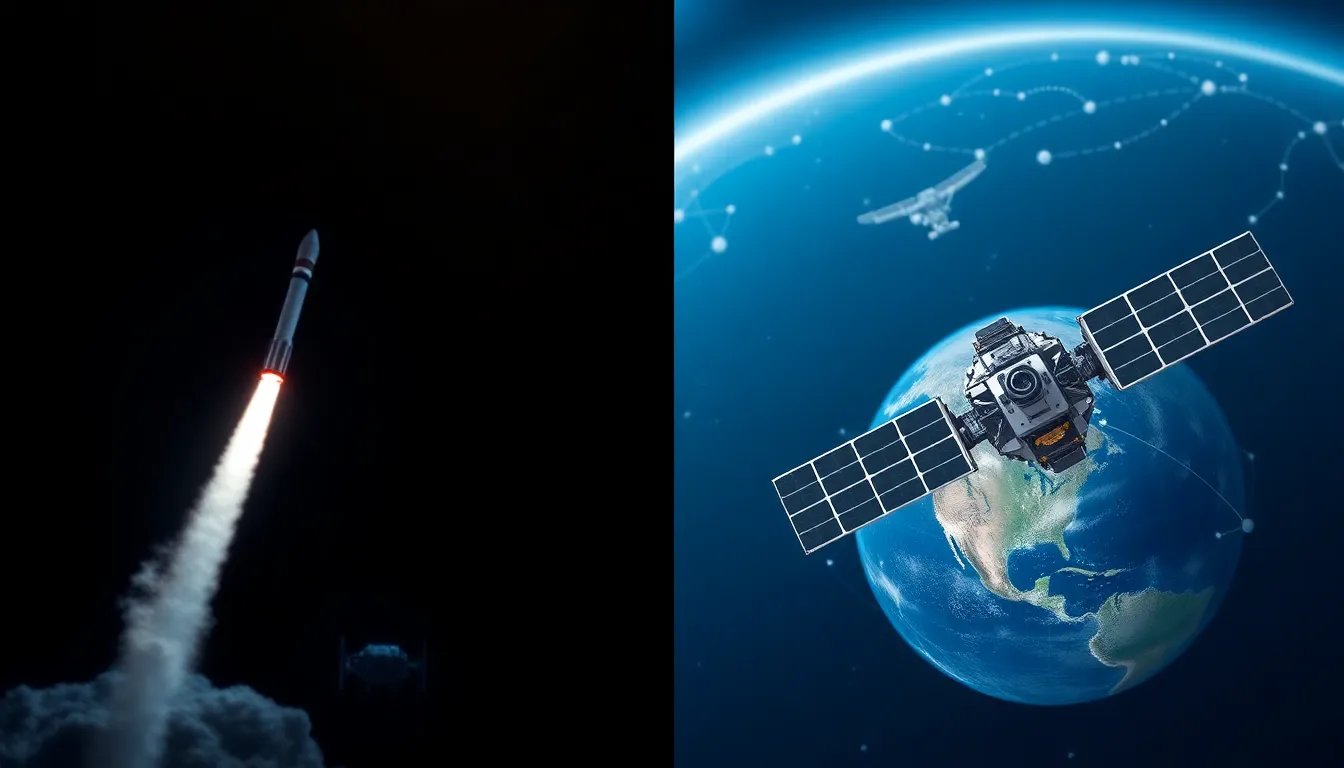
Space technology vs. satellite technology, these terms often get tossed around as if they’re interchangeable. They’re not. While both operate beyond Earth’s atmosphere, they serve different purposes and cover different scopes. Space technology is the broader category. It includes everything humans use to explore, travel through, and operate in outer space. Satellite technology is one specific application within that larger field. Think of it this way: all satellite technology is space technology, but not all space technology involves satellites. Understanding this distinction matters for anyone following advancements in aerospace, telecommunications, or scientific research. This article breaks down what each term means, highlights the core differences, and shows how these technologies work together to shape modern life.
Table of Contents
ToggleKey Takeaways
- Space technology vs satellite technology represents a parent-subset relationship—all satellite technology is space technology, but not all space technology involves satellites.
- Space technology encompasses rockets, spacecraft, space stations, rovers, and deep space exploration systems designed to operate beyond Earth’s atmosphere.
- Satellite technology focuses specifically on orbital systems that provide practical services like GPS navigation, weather forecasting, and global communications.
- The satellite industry generated over $280 billion in revenue in 2023, driven by demand for connectivity and Earth monitoring services.
- These technologies depend on each other—satellites need rockets to reach orbit, while deep space missions rely on satellite networks for communication with Earth.
- Understanding the distinction between space and satellite technology helps clarify funding decisions, regulatory frameworks, and career paths in aerospace.
Understanding Space Technology
Space technology refers to the equipment, systems, and scientific knowledge used to explore and operate in outer space. This includes rockets, spacecraft, space stations, planetary rovers, and the ground systems that support them.
The history of space technology traces back to the mid-20th century. The Soviet Union launched Sputnik 1 in 1957, marking humanity’s first artificial satellite. The United States followed with Explorer 1 in 1958. These early achievements sparked the Space Race and led to rapid advancements in rocketry, life support systems, and orbital mechanics.
Today, space technology encompasses a wide range of applications:
- Launch vehicles: Rockets like SpaceX’s Falcon 9 and NASA’s Space Launch System carry payloads into orbit and beyond.
- Human spaceflight: The International Space Station (ISS) serves as a laboratory for scientific research in microgravity.
- Deep space exploration: Missions like NASA’s Voyager probes and the James Webb Space Telescope study distant planets, stars, and galaxies.
- Planetary science: Rovers like Perseverance explore Mars, collecting samples and searching for signs of past microbial life.
Space technology also includes the propulsion systems, navigation instruments, thermal protection, and communication networks that make these missions possible. It’s a vast field that continues to grow as private companies and government agencies push further into the solar system.
The key point here: space technology is the umbrella term. It covers every tool and technique humans use to leave Earth and function in the vacuum of space.
What Is Satellite Technology
Satellite technology focuses specifically on artificial satellites, objects placed into orbit around Earth or other celestial bodies to perform defined tasks. These satellites collect data, relay communications, or provide navigation services.
A satellite consists of several key components:
- Bus: The main body that houses power systems, propulsion, and structural elements.
- Payload: The instruments or equipment that perform the satellite’s primary mission.
- Solar panels: These generate electricity from sunlight to power onboard systems.
- Antennas: Used to transmit and receive signals from ground stations.
Satellites serve different purposes depending on their design and orbital position:
| Satellite Type | Primary Function | Example |
|---|---|---|
| Communication | Relay phone, TV, and internet signals | Starlink, Intelsat |
| Navigation | Provide GPS and positioning data | GPS, Galileo, GLONASS |
| Weather | Monitor atmospheric conditions | NOAA’s GOES satellites |
| Earth Observation | Image land, oceans, and climate patterns | Landsat, Sentinel |
| Scientific | Study space phenomena | Hubble Space Telescope |
Satellite technology has transformed daily life. GPS navigation guides billions of travelers. Weather satellites provide forecasts that save lives during storms. Communication satellites connect remote regions to the global internet.
The satellite industry generated over $280 billion in revenue in 2023, according to the Satellite Industry Association. This growth reflects increasing demand for connectivity, Earth monitoring, and data services.
Unlike the broader category of space technology, satellite technology stays focused on these orbital systems and their Earth-based applications.
Core Differences Between Space and Satellite Technology
Space technology and satellite technology differ in scope, purpose, and application. Here’s a direct comparison:
Scope and Definition
Space technology covers all systems designed for space exploration and operations. This includes rockets, space stations, rovers, telescopes, and yes, satellites. Satellite technology is a subset. It deals only with artificial satellites and their supporting infrastructure.
Primary Goals
Space technology aims to explore, understand, and use space. Its goals include human settlement on other planets, asteroid mining, and scientific discovery. Satellite technology focuses on practical Earth-oriented services: communication, navigation, weather prediction, and surveillance.
Hardware Involved
Space technology uses diverse hardware:
- Launch vehicles (rockets)
- Crewed spacecraft (Crew Dragon, Orion)
- Space habitats (ISS, planned lunar stations)
- Robotic explorers (Mars rovers, deep space probes)
Satellite technology uses:
- Satellites in various orbits
- Ground stations for control and data reception
- User terminals (GPS receivers, satellite phones)
Operational Environment
Space technology operates across multiple environments, low Earth orbit, lunar orbit, interplanetary space, and planetary surfaces. Satellite technology primarily operates in Earth’s orbital zones: Low Earth Orbit (LEO), Medium Earth Orbit (MEO), and Geostationary Orbit (GEO).
Economic Focus
The satellite industry generates most of its revenue from commercial services. Space technology investments often come from government agencies or long-term private ventures focused on exploration and resource extraction.
These differences matter because they shape funding decisions, regulatory frameworks, and career paths in aerospace. Someone working on satellite communication systems has a different job than an engineer designing Mars landers, even though both work in “space.”
How These Technologies Work Together
Space technology and satellite technology depend on each other. Satellites need rockets to reach orbit. Deep space missions rely on satellite networks for communication.
Consider a Mars mission. The spacecraft uses space technology for propulsion, life support, and landing systems. But once it reaches Mars, it communicates with Earth through a relay satellite orbiting the planet. NASA’s Mars Reconnaissance Orbiter serves this exact function, it passes data between surface rovers and mission control.
The same integration applies closer to home. The International Space Station uses satellite links to maintain constant contact with ground teams. Astronauts conduct video calls, download experiment data, and receive mission updates through these connections.
Commercial space companies illustrate this partnership well. SpaceX builds rockets (space technology) and operates Starlink (satellite technology). The rockets launch the satellites. The satellites generate revenue that funds rocket development. Each technology strengthens the other.
Future projects will deepen this relationship. Lunar Gateway, a planned space station orbiting the Moon, will use communication satellites to stay connected with Earth. Proposed asteroid mining operations would deploy satellites to survey targets before sending extraction equipment.
Space technology provides the vehicles and infrastructure. Satellite technology provides the communication backbone and practical services. Neither reaches full potential without the other.

